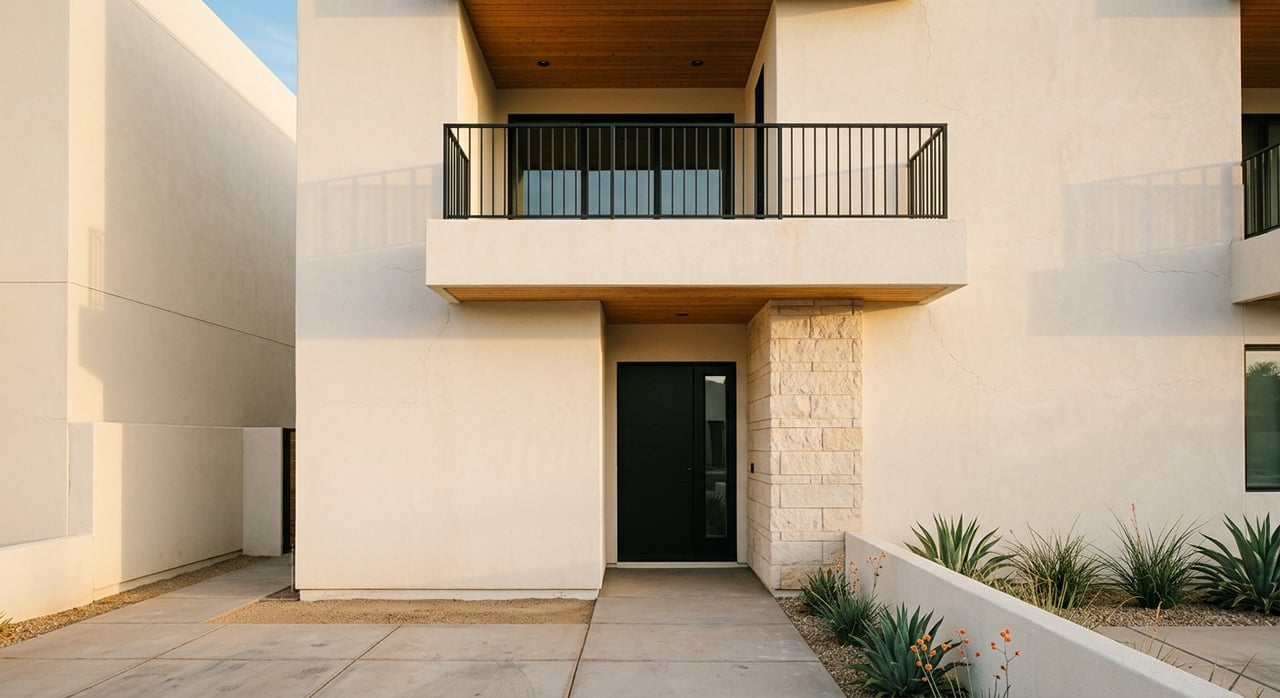
Phoenix Condo vs House: Smart Choices for Relocating Buyers
April 2, 2026
April 2, 2026
If you’re relocating to Phoenix, one of the first big decisions you’ll face is simple on paper but more nuanced in real life: Should you buy a condo or a single-family home? Your choice affects your budget, upkeep, location options, and day-to-day lifestyle. The good news is that Phoenix offers strong options in both categories, and when you understand the tradeoffs, it becomes much easier to narrow your search. Let’s dive in.
For many relocating buyers, price is the first major divider between condos and single-family homes. In February 2026, the median sale price in Phoenix was $461,300 across all home types, according to Redfin’s Phoenix housing market data.
Attached homes often create a lower entry point. Redfin shows Phoenix condos with median listing prices around $310,000 and townhouses around $340,000, while the Maricopa County MLS June 2025 report cited in the research showed a $505,000 median sold price for single-family detached homes versus $330,000 for other property types. For buyers moving from out of state, that gap can make a real difference in monthly payment, down payment, and overall flexibility.
County valuation data points in the same direction. Maricopa County Assessor data shows a 2026 median value of $270,300 for condo and townhome parcels compared with $407,800 for residential parcels overall. That does not tell you exactly what any one home will cost, but it does reinforce the broader pattern that attached homes often come with a lower value base.
Price is only part of the story. When you compare a condo to a single-family home in Phoenix, you also need to understand who handles what.
Under Arizona condominium law, a condo includes individually owned units plus shared common elements owned collectively by unit owners. In general, the association is responsible for maintenance, repair, and replacement of common elements, while the unit owner is responsible for the unit unless the recorded declaration says something different.
That setup can appeal to relocating buyers who want less exterior upkeep. If you do not want to think as much about landscaping, building exteriors, or certain shared areas, a condo may offer a more hands-off ownership experience.
Single-family homes usually give you more direct control over the property, but they also place more responsibility on you. Yard care, exterior maintenance, irrigation, and many repair decisions may fall directly on the homeowner, depending on the community and its rules.
Townhomes can be the most confusing option because they do not always follow one standard model. In Arizona, some are legally structured as condos, while others are part of a planned community with a different HOA setup.
Arizona defines a planned community as a development where owners are mandatory members of an association and pay assessments for the management, maintenance, or improvement of property. In practical terms, that means two townhomes that look similar from the street may have very different maintenance obligations.
Before you buy, you should verify exactly who handles:
For relocating buyers, this step matters a lot. The governing documents, CC&Rs, and HOA structure can shape your real ownership costs just as much as the purchase price.
Where you want to live in Phoenix often points you toward one property type over the other. Attached homes are more common in higher-density and more urban parts of the city, while single-family homes are often easier to find in areas built around more space and private outdoor living.
According to Redfin’s Phoenix neighborhood guide, Downtown Phoenix is known for high-rise condos and loft-style apartments. Central City includes a mix of single-family homes, townhomes, and apartments. Biltmore and Camelback East also offer a mix of detached and attached housing.
Walkability is another major factor. Phoenix overall has a Walk Score of 41, while Downtown Phoenix is listed at 85 in Redfin’s Phoenix condo market page. If you want easier access to restaurants, events, and a more urban feel, condos and townhomes may fit your lifestyle better.
If you want more privacy, more separation from neighbors, and more room for outdoor living, a single-family home may feel like the better match. That is especially true if your move to Arizona includes plans for a yard, patio space, or a more traditional detached-home setup.
Phoenix buyers should think about outdoor space differently than buyers in many other markets. In this climate, the type of yard you have can change both your maintenance routine and your ongoing costs.
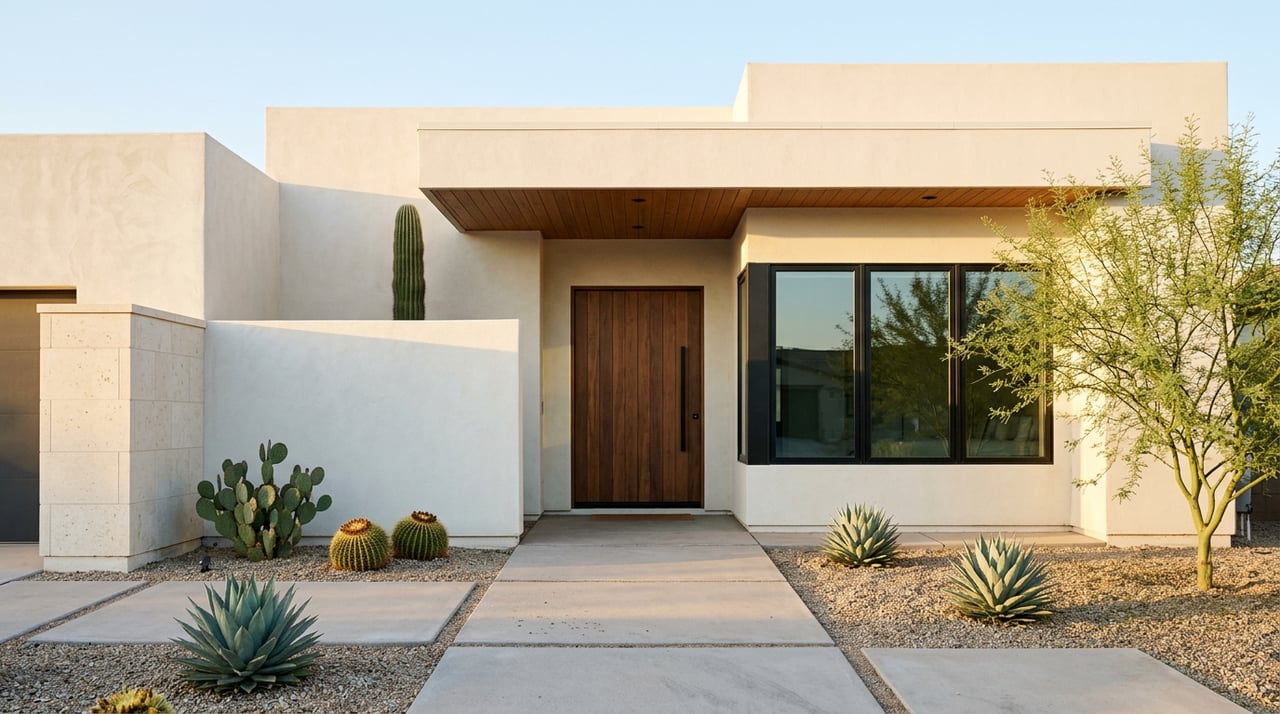
The City of Phoenix water resource plan notes that older homes are more likely to have grass and more water-dependent landscaping, while newer homes more often feature gravel, rock, and desert-adapted plants. That means the age and style of a property can affect how much work and water your outdoor space may require.
The city also says that up to 70% of residential water use is for outdoor watering. It also notes that common landscape areas consume most of the water HOAs use. In other words, outdoor costs matter whether you own your own yard or share landscaping responsibility through an association.
For some buyers, a condo or townhome with limited private outdoor space is a welcome simplification. For others, a detached home with more room outside is worth the added upkeep.
A lower purchase price does not always mean lower total ownership cost, so it helps to compare the full picture.
Condo buyers in Arizona typically need an HO-6 insurance policy. The Arizona Department of Insurance and Financial Institutions explains that HO-6 policies generally cover interior walls, fixtures, and personal property, while the HOA master policy usually covers the exterior and common areas.
That means many condo and townhome buyers need to budget for both:
Property taxes also deserve a closer look. Maricopa County Treasurer information explains that property tax bills include county, city, school, special-district, and state taxes. Since condo and townhome parcels often have a lower median value base than residential parcels overall, many attached homes may have a lower tax base, but the final tax bill still depends on the exact property and tax district.
If you want a quick way to frame the decision, this side-by-side view can help:
| Factor | Condo or Townhome | Single-Family Home |
|---|---|---|
| Entry price | Often lower | Often higher |
| Exterior maintenance | Often shared through HOA | Often owner responsibility |
| HOA involvement | Usually more central | Varies by community |
| Walkable locations | More common in urban areas | Less common overall |
| Privacy | Usually less | Usually more |
| Outdoor space | Often smaller or shared | Often larger and more private |
| Control over exterior | More limited | More direct |
A condo or townhome may make the most sense if you want a lower entry price, less exterior upkeep, and a location closer to Phoenix’s more urban areas. It can also be a strong fit if you are comfortable with HOA dues, shared rules, and a more lock-and-leave style of ownership.
A single-family home may be the better fit if you want more privacy, more control over the property, and more room for outdoor living. It often suits buyers who are comfortable taking on more maintenance and who see the yard and exterior space as a benefit rather than a burden.
If you’re relocating, the right answer is rarely just about square footage. It’s about how you want to live once the boxes are unpacked.
No matter which direction you lean, due diligence matters. This is especially true with condos and townhomes, where the legal structure and association documents can directly affect your ownership experience.
Before making an offer, ask:
These questions can help you avoid surprises and compare homes more confidently. For a long-distance move, they are even more important because the details are not always obvious from listing photos alone.
If you’re weighing Phoenix condos versus single-family homes and want help sorting through the tradeoffs, Colleen Marie Heaney offers personalized guidance designed to make your move feel clear, organized, and far less stressful.
Inspiration and Information for Every Move
Whether you’re moving across town or across state lines, Colleen is here to make your transition simple, enjoyable, and stress-free.