Gilbert vs Chandler: Choosing Your Ideal East Valley Fit
May 7, 2026
May 7, 2026
Wondering whether Gilbert or Chandler is the better fit for your next move? You are not alone. If you are comparing these two East Valley neighbors, the challenge is not finding good options. It is figuring out which city better matches the way you actually want to live day to day. In this guide, you will see how Gilbert and Chandler differ in housing, commuting, job access, and lifestyle so you can narrow your search with more confidence. Let’s dive in.
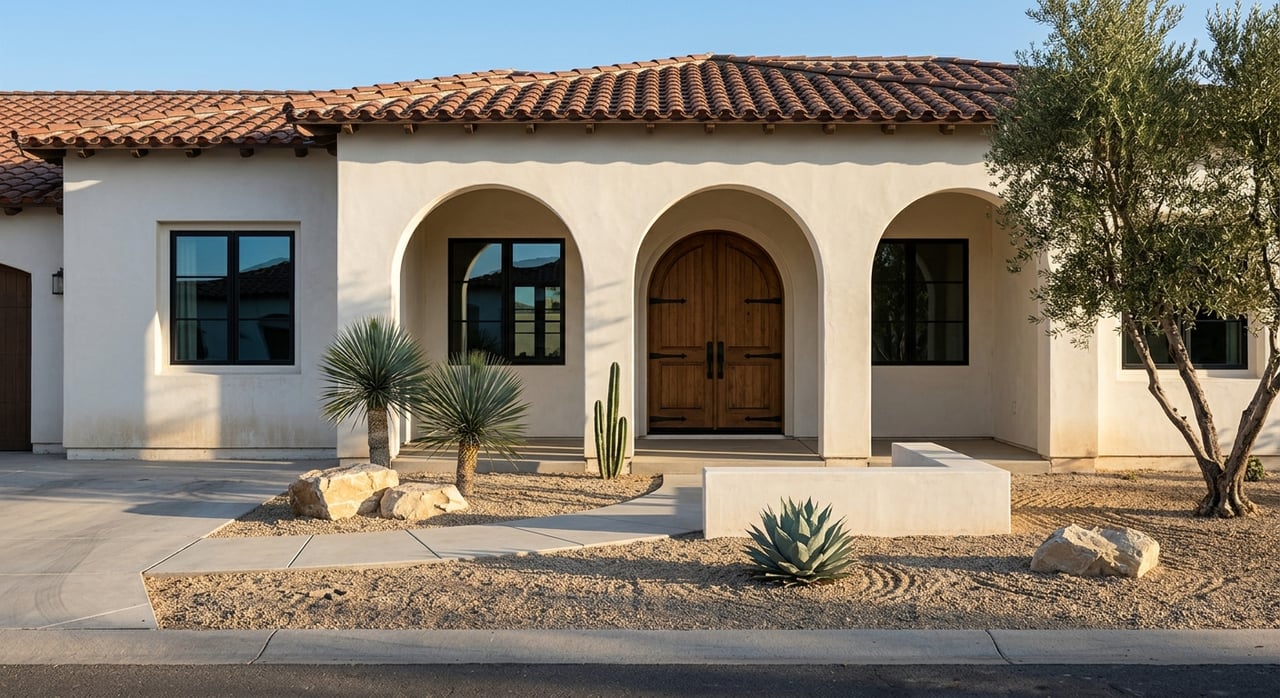
Gilbert and Chandler sit close to each other, but they offer different rhythms. Gilbert tends to feel more suburban, with a stronger owner-occupied profile and a housing mix led by detached single-family homes. Chandler feels more built out, with more transit options, more housing variety, and stronger access to major employment centers.
That does not mean one city is better than the other. It means your best choice depends on what matters most to you. If your priorities are newer subdivisions, trail access, and a more residential pace, Gilbert may stand out. If you want more commuting choices, a busier downtown, and a wider range of housing types, Chandler may be the stronger fit.
Gilbert’s 2025 to 2029 Consolidated Plan reports 94,983 housing units, with 96.6% occupied. Of occupied units, 74% are owner-occupied. The same report says 86.3% of Gilbert’s housing is low-density single-family, while 13.4% is multifamily.
For many buyers, that points to a more traditional suburban setup. You are more likely to find neighborhoods centered on detached homes, with a housing stock that trends newer overall. Gilbert also reports that more than 95% of its housing stock was built after 1980, with older housing concentrated in the Heritage District and north Gilbert.
Gilbert’s new-residents information also notes a range of options, from urban condos and apartments to large lots, starter homes, and executive homes. It also still has vacant and undeveloped land in parts of the planning area. That can matter if you are drawn to newer community layouts or want to explore areas with room for continued growth.
Chandler reports more than 112,000 total housing units. The city breaks that mix into 71.7% single-family homes, 20.9% apartments, 5.5% condos, and 1.8% mobile homes. Chandler also says about 93% of its available land has already been developed, with less than 2% remaining for residential development.
In practical terms, Chandler offers more housing variety and more infill or redevelopment-driven options. If you want a condo, apartment, townhome-style living, or a location closer to jobs and downtown activity, Chandler gives you more ways to shop. The city also notes that multifamily development has outpaced single-family construction over the past 10 years.
When it comes to owner occupancy, Census QuickFacts lists Chandler at 65.0% for 2020 to 2024, compared with Gilbert’s 74% from the town’s plan data. Median owner-occupied home values are also fairly close, with Gilbert at $518,600 and Chandler at $507,800 according to the cited local and Census sources.
If you picture yourself in a newer detached home in a more single-family-focused environment, Gilbert may feel more natural. If you want more housing types, more built-in flexibility, and more options near established employment areas, Chandler may check more boxes.
Gilbert says it has direct access to U.S. 60 and Loop 202 and sits about eight miles from Interstate 10. The town also describes itself as a convenient reverse-commute location for employers in the Southeast Valley.
For public transit, Gilbert is a Valley Metro member agency. Its transportation page lists local and express routes 108, 112, 136, 140, and 156, along with a Gilbert Park-and-Ride lot. Route 112 connects to downtown Chandler, while Route 136 connects riders along Gilbert Road to the Heritage District and the park-and-ride.
Gilbert also stands out for active transportation. The town says it has more than 60 miles of marked bike trails and a Central Trail System of roughly 135 miles. If you value biking, walking, recreation, or shorter local trips on connected paths, that can be a real quality-of-life plus.
Chandler’s transportation profile is broader. The city says it is served by three major highways, two railroad corridors, a well-planned street and transit network, expanding bike and shared-use paths, and a municipal airport.
Its transit page lists 11 bus routes, Chandler Flex on-demand service, ADA paratransit and RideChoice, a Lyft first-mile and last-mile program in south Chandler, and an express route from the Chandler Park and Ride to downtown Phoenix. Chandler also says local bus service connects to Mesa, Tempe, and the Valley Metro Light Rail.
The Chandler Park and Ride at Germann and Hamilton Street has 460 parking spaces. It is also where Route 112 and express service to downtown Phoenix originate. For buyers who want more ways to commute without relying on a car for every trip, Chandler has the stronger official transit profile.
If you expect to drive most places and want freeway access plus a strong trail network, Gilbert may feel easy and comfortable. If you want more transit choices, stronger regional connections, and more car-light options, Chandler likely has the edge.
Gilbert’s Office of Economic Development identifies four employment corridors. The Northwest corridor is the town’s densest employment center and is tied to science, technology, aerospace, manufacturing, and the Heritage District. The Banner corridor centers on health care, and the Gateway corridor connects to aerospace, aviation, retail, and Phoenix-Mesa Gateway Airport.
Gilbert also highlights employers such as Banner MD Anderson Cancer Center, Banner Gateway Medical Center, Northrop Grumman, Lockheed Martin, and EchoStar. That makes Gilbert more than a bedroom community. It has real local job nodes, especially if your work connects to health care, aerospace, or related industries.
Chandler’s economic development strategy focuses on advanced manufacturing, aerospace and defense, bioscience, advanced business services, and next-generation software engineering. The city says it has five designated employment corridors with 2,761 businesses and 103,540 jobs.
Chandler also reports that manufacturing jobs make up 23% of all jobs in the city, the highest share among the 10 largest cities in Greater Phoenix. Official city materials highlight major employers such as Intel, NXP, Microchip Technology, ASML, Rogers Corporation, Isola, Edwards, and Applied Materials. The city’s April 2026 semiconductor brochure says Intel has about 10,000 employees in Chandler, while NXP and Microchip each have about 1,700.
The closer you live to your daily routine, the more it can shape your overall satisfaction. If you want direct access to major semiconductor, advanced manufacturing, and corporate employers, Chandler stands out. If your work lines up more with Gilbert’s health care, aerospace, or Southeast Valley job corridors, Gilbert may be the better match.
Gilbert has several lifestyle draws that support a more suburban routine with strong recreational access. The Riparian Preserve at Water Ranch is a 110-acre wetland and wildlife sanctuary with trails, a floating boardwalk, an urban fishing lake, camping spots, and a play area.
Downtown Gilbert, centered around the Heritage District, is known for dining, live entertainment, arts, culture, and open-air patio spaces. The town also promotes destinations like Water Tower Plaza, Freestone Park, and Cactus Yards, which add parks, gathering spaces, and sports facilities into the mix.
Gilbert’s Parks and Recreation department also notes that several facilities and parks are Certified Autism Centers. For many households, that broader parks and recreation focus can be an important part of day-to-day livability.
Chandler’s downtown is officially described as a regional destination for shopping, dining, living, culture, and the arts. The downtown partnership says there is live entertainment seven days a week, a farmers market, and a beer trail with six breweries in two miles.
The city’s arts and culture offerings include the Chandler Center for the Arts, Vision Gallery, Chandler Museum, and public art programming throughout the city. On the recreation side, Chandler highlights a broad set of parks and facilities, including Tumbleweed Park, Chandler Nature Center, Snedigar Recreation Center, Tennis Center, and Veterans Oasis Park.
Tumbleweed Park alone is described as about 200 acres with athletic fields, play areas, pickleball courts, and the Tumbleweed Recreation Center. If you want a city with a more layered downtown experience and a broad public recreation system, Chandler has a lot to offer.
If you are stuck between Gilbert and Chandler, try filtering your choice through three practical questions.
If your top priority is a detached home in a single-family-heavy setting, Gilbert may rise to the top. If you want more housing variety, including condos and apartments, Chandler may give you more flexibility.
If you are comfortable driving and value trails and suburban road access, Gilbert may fit your routine. If you want more transit service, more regional connections, and easier access to major job corridors, Chandler is often the stronger choice.
If you want a more residential pace with strong parks, trails, and a compact dining district, Gilbert may feel right. If you want a more active downtown with deeper arts, events, nightlife, and employer access, Chandler may be a better fit.
In many cases, the best answer comes down to location within the city, not just the city name on the map. Your access to the right freeway, the housing type you prefer, and the job center you need most can matter more than the boundary line itself.
If you are weighing Gilbert against Chandler and want help narrowing it down to the neighborhoods that match your budget, commute, and lifestyle, Colleen Marie Heaney can help you compare your options with local insight and personalized guidance.
Inspiration and Information for Every Move
Whether you’re moving across town or across state lines, Colleen is here to make your transition simple, enjoyable, and stress-free.